

Pay transparency is not a compensation exercise
Pay bands and reports already exist in most organizations.
What doesn’t exist is a consistent way to explain why two roles are
comparable — or not.
The EU pay transparency directive makes this explicit:
equal pay requires objective, gender-neutral role definitions
and a harmonized, distinguishable structure.
If jobs are unstructured, pay will never be defensible.

Equal work has to be provable now.
To meet the directive’s requirements, employers must be able to show:
- Comparable roles across teams and regions
- Clear, neutral criteria for role evaluation
- Differentiation between levels and scope
- Documented reasoning behind pay differences
- Explainable answers to employee requests
This is not a reporting problem.
It is a structural one.
Titles mean different things. Levels evolved historically. Skills are undocumented or vague.
As long as that remains true, pay comparisons collapse — regardless of tooling.
Comparable pay starts with comparable work.
Cobrainer provides the job, level, and skill architecture organizations are measured against — the foundation regulators, works councils, and employees will question first.
No structure means no pay transparency. Cobrainer has the job data pay transparency depends on.
What we deliver.
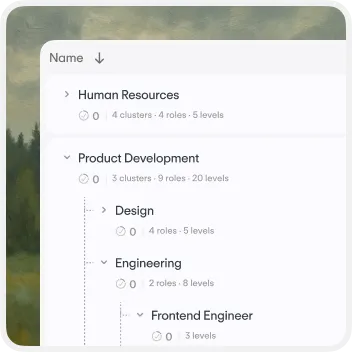
A consistent job architecture.
One coherent job family, role, and level structure across the entire organization.
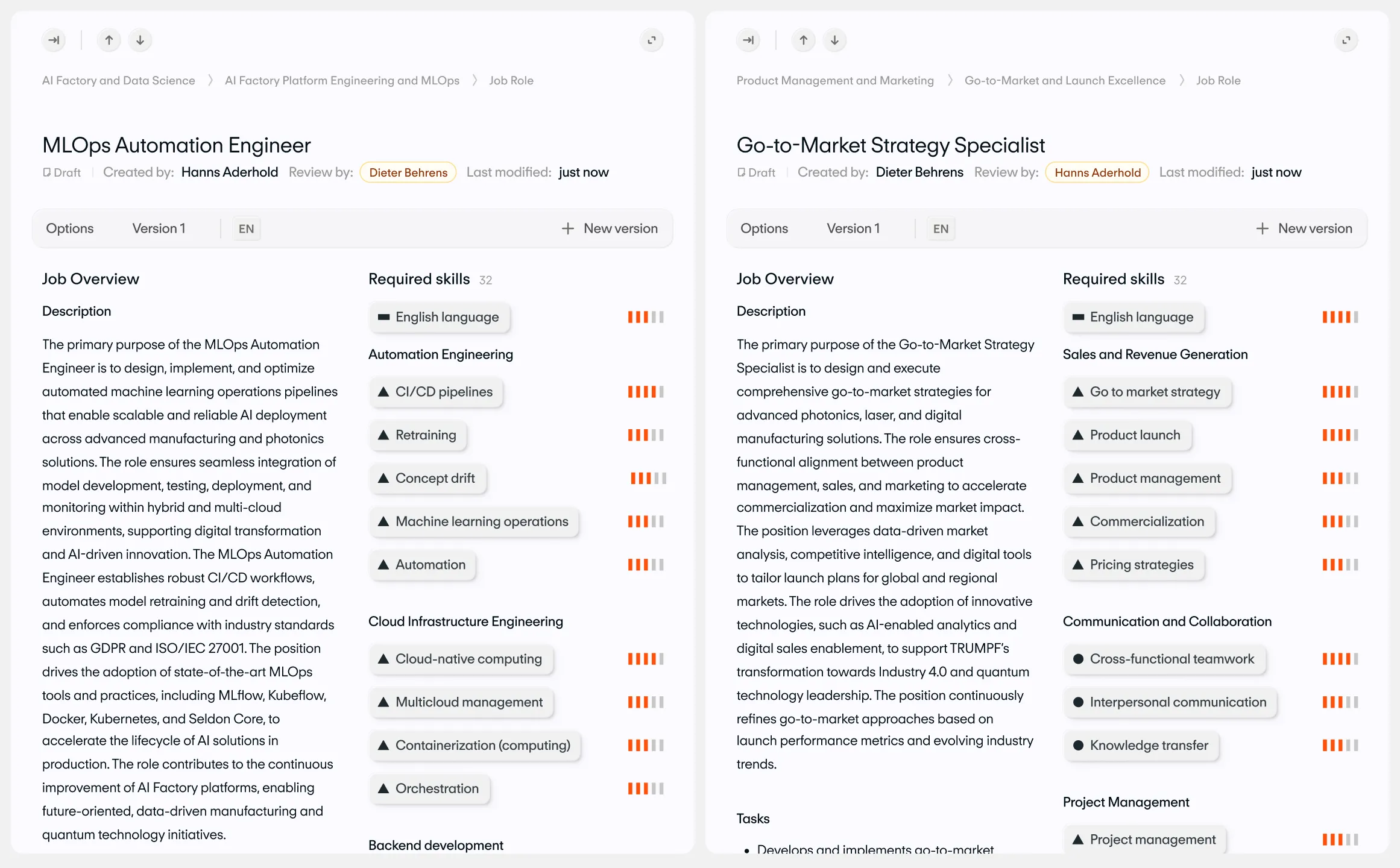
Skill-based role definitions.
Truly objective criteria instead of titles and subjective interpretation.
Explainable leveling and grading logic.
Clear differentiation based on scope, complexity, and skill depth.
A living reference system.
Versioned, auditable, and ready to be reviewed or exported.
Truly objective job profiles based on the best skill data.
Become EU Pay Transparency compliant with Cobrainer.
Build the foundation.
Upload your existing company documents (job descriptions, role frameworks, policies).
Cobrainer uses them to create a consistent job family and job cluster structure.
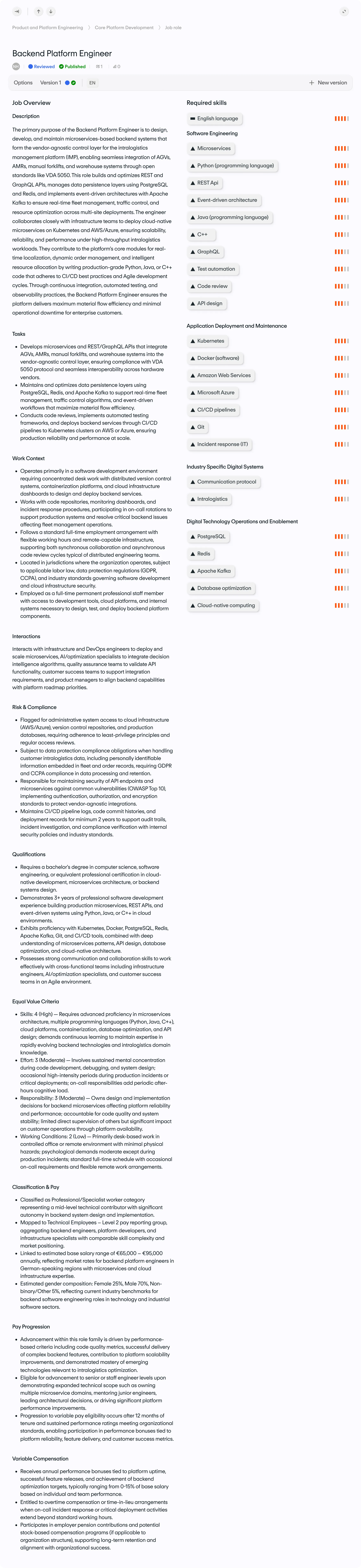
Create compliance-ready job profiles.
Start from Cobrainer’s EU Pay Transparency-ready job profile templates. Adjust roles, responsibilities, and requirements where needed.
Define career paths and grading logic.
Select from built-in career and grading frameworks. Adapt levels and progression rules to match your organization and collective agreements.
Analyze real pay transparency data.
Connect your job architecture to employee data via integrations with SAP, Workday, or Personio to run pay gap and comparability analyses.
Need support with your grading framework or the negotiation with your work council ?
We partner with the best.


Want to become part of an industry-leading network that delivers world-class solutions to clients around the globe?
Talk to Julia